

Six Important Things To consider If You Have Rheumatoid Arthritis And Plan on Scuba Diving In Diani Beach
Living with rheumatoid arthritis doesn’t have to keep you out of the water. This post walks through six key things to think about before scuba diving in Diani Beach if you have RA — from getting medical clearance to managing flare-ups, choosing the right gear, and picking low-impact dive sites like Tiwi Wall, Kisima Mungu, and Galu. It’s practical, honest, and written for people who want to dive but need to plan a little more carefully. Scuba Duka’s local knowledge of the South Coast, from Diani all the way to Kisite-Mpunguti Marine Park, is woven throughout.
4. Buoyancy Control Reduces Strain on Your Joints
Yellowtail clownfish swimming above a sea anemone on a vibrant coral reef
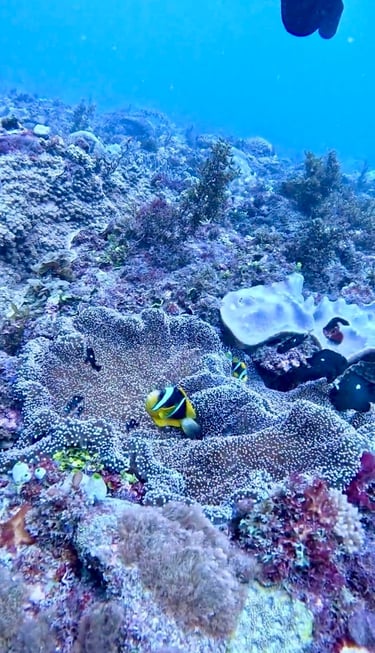
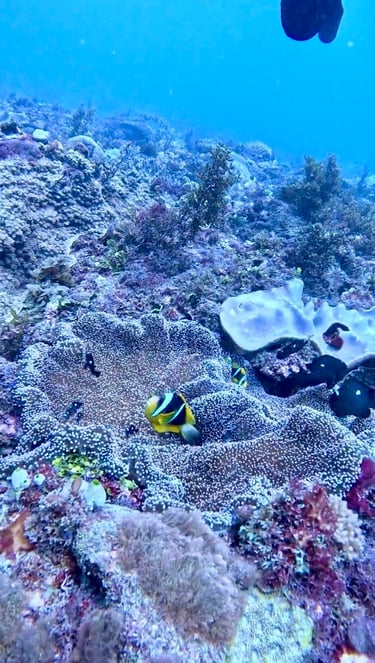
Talk to us at The Scuba Duka Diving Centre about timing. We know which sites are well-sheltered and which conditions suit low-impact diving. The reef diving sites like Tiwi Wall known for its shallow top table with a gradual drop, Kisima Mungu, Galu, Igloo, Kinondo, Mwanamoshi, and Mwanyanza are good options on gentler days.
The short answer is: yes. Many people with rheumatoid arthritis (RA) scuba dive. But it depends on your symptoms, your treatment, and what your doctor says. RA is a condition that causes joint inflammation, pain, and stiffness. Symptoms vary a lot from person to person. Some people have mild, well-controlled RA. Others deal with more frequent flare-ups and limited mobility. That range matters when it comes to diving. Scuba diving puts some physical demands on your body. Carrying gear, getting in and out of the water, and managing buoyancy all require a degree of movement and strength. But with the right planning, many people with RA dive safely and comfortably. At The Scuba Duka Diving Centre in Diani Beach, we work with divers of all abilities. We know and understand the dive sites near, Diani Beach, Tiwi, Galu, Kinondo most of the South Coast of Kenya, and all the way to Kisite-Mpunguti Marine Park. That local knowledge helps us plan dive approaches that work for different bodies and conditions.
Here are six important things to think about if you have RA and want to dive. your text here...
Six Important Things To Consider If You Have Rheumatoid Arthritis And Plan on Scuba Diving In Diani Beach
Before you book any dive, talk to your doctor. This is the single most important step. Your doctor knows your case. They know your current medications, your inflammation levels, and how active your disease is. Some RA medications — including biologics, disease-modifying drugs (DMARDs), and steroids — can interact with diving physiology in important ways. Immunosuppressants may increase your infection risk. Some drugs can cause fatigue or dizziness.
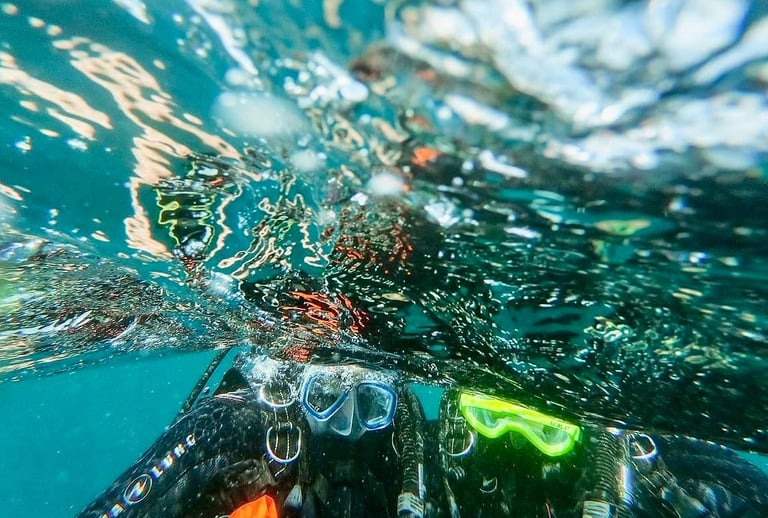
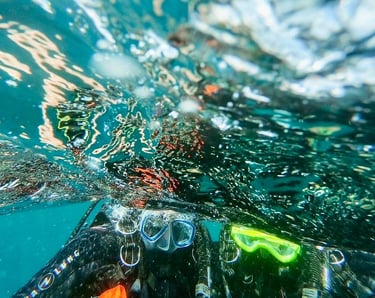
Scuba divers from The Scuba Diving Centre with exploring a vibrant coral reef in clear blue Indian ocean water.
1. Medical Clearance Comes First — Always
Others may affect how your body handles pressure changes. Your doctor can advise on whether it is safe for you to dive and under what conditions. Ideally see two doctors: your rheumatologist and a physician who understands dive medicine. Bring a full medication list to the dive medical appointment and your recent test results if you have them. SSI has a standard medical statement that all new divers complete before training. If you answer yes to questions about joint problems or chronic conditions, a doctor must sign off before you can start. This is not a barrier. It is a safeguard. At The Scuba Duka Diving Centre, our team will walk you through the process. We can explain what questions to bring to your doctor and what a dive-specific medical review covers. If you are travelling to Diani Beach from elsewhere, get clearance at home before you travel. That way, you arrive ready to dive.
A diagnosis of RA does not automatically stop you from diving. What matters more is your current, practical joint function. Ask yourself these questions. Can you walk on uneven sand? Can you lift moderate weight? Can you climb a boat ladder? Can you perform fin kicks without too much strain? Can you hold a regulator, clear your mask, and inflate your BCD? These are the tasks that matter most in the water. Limited shoulder or wrist mobility can make gear handling harder. Knee or hip issues may affect how you fin or climb a ladder. If RA affects your hands, you may find it harder to grip equipment or give underwater signals.
The good news is that buoyancy changes things underwater. When you are neutrally buoyant, the buoyancy counteracts gravity significantly reducing the compressive weight and impact on your joints. Many divers with RA report that being in the water actually feels easier than moving on land. The physical challenges are mostly on the surface — getting in, getting out, and handling your gear.
Practical strategies that help:
• Practise gear handling on land before your first dive.
• Use easy-release clips and equipment with smooth controls.
• Ask your instructor to adapt signals and procedures if hand function is limited.
• Choose sites with gentle slopes, calm conditions, and crew assistance for entries and exits.
If pain means you cannot perform a basic emergency swim or clear your mask, it is safer to wait until your function improves before diving.
2. Flare-Ups Change Everything — Know Your Own Pattern
One thing that surprises many new divers is how physical scuba can be and how much of that effort disappears once you master buoyancy. Just good buoyancy means you are neutrally buoyant in the water. You are not fighting to stay at depth. You are not kicking hard to keep your position. You are just floating, breathing slowly, and moving gently. For a diver with RA, this is the goal. Poor buoyancy means constant small corrections. Extra fin kicks, clutching gear, tension in your hands and hips. In a 40-plus-minute dive, that adds up and it can increase fatigue and joint strain. At The Scuba Duka Diving Centre, we focus on buoyancy skills and also have an SSI class for perfect buoyancy. Whether you start with a Try Scuba class or plan for certification courses starting with our SSI Open Water Diver course, practicing these skills in a pool or in a confined area before heading to open water is vital. For divers with RA, who need extra time to practice their skills, we do our best to get you comfortable and ready to head out for a dive. Also at The Scuba Duka Diving Centre, we focus on morning dives which can also help because the Indian Ocean in Diani Beach is often calmer in the mornings, with lighter currents.
3. Joint Mobility Matters More Than the Diagnosis Alone
RA does not stay the same from day to day. Most people with RA know the difference between a good day and a flare-up. During a flare, joints are swollen, stiff, and painful. That is not the time to dive. Diving during a flare carries real risks. Joint pain underwater can distract you and affect your control. Swollen hands may struggle with equipment. Physical stress on inflamed joints is never a good idea. If you feel unusually fatigued, inflamed, or unwell, postpone. The good news is that diving on a calm, stable day looks very different. RA divers can plan their trips around their patterns and schedule dives during stable periods and build in flexibility if a flare hits. Before booking a scuba diving trip it's good to know the Indian Ocean seasons. During the Kusi season (roughly April to October), the southeast monsoon brings stronger winds and choppier water. During the Kaskazi season (November to March), conditions are generally calmer and more predictable. Calmer water means less physical effort. That matters if your joints are not at their best.
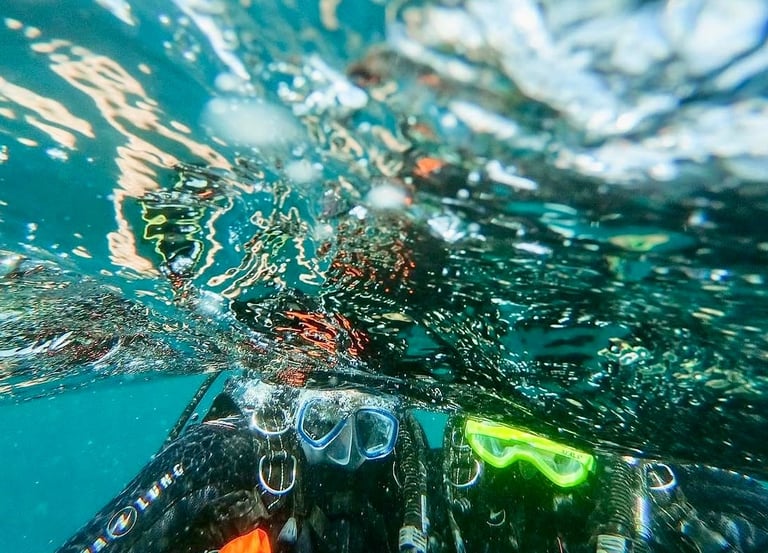
Underwater view of The Scuba Duka Diving Centre scuba divers diving at one of the exciting Diani Beach coral reef sites
5. Equipment Fit and Dive Type Both Matter
Equipment fit
Standard scuba equipment is designed for average body proportions. For someone with RA, ill-fitting gear can turn a comfortable dive into a painful one. In Diani Beach, the ocean temperatures run between 25°C and 30°C year-round. That means you can often dive in a thin, flexible wetsuit — which is much easier to put on, take off, and move in. Split fins or open-heel fins with a relaxed blade can reduce the effort needed from your ankles and knees. Regulators and BCD controls can be adjusted to reduce grip requirements.
At The Scuba Duka's dive shop, we stock a range of gear and are happy to talk through what works best for you before you commit to a dive. Before a scheduled dive we have you come in and try gear on in comfort.
Shore diving vs. boat diving
We also try to avoid shore dives at The Scuba Duka Diving Centre. These entries can involve walking over sand or rock in fins, managing surf, and carrying kit down a beach. If your hips, knees, or ankles are affected by RA, that can be genuinely difficult.
Our diving boats remove much of that. We help you set up your kit up on the boat, enter from a platform or ladder, and come back the same way making boat diving simply more manageable.
The Scuba Duka Diving Centre runs guided dive trips and boat hire services in Diani Beach. Our boats access reefs off Diani Beach, Tiwi, Kinondo, Galu, areas around Chale Island, and the Kisite-Mpunguti Marine National Park near Wasini Island. We can advise on the most comfortable entry and exit points for your needs.
6. Start Gently — Try Scuba Before Committing to a Course
If you have RA and have never dived before, there is a low-pressure way to find out if scuba works for your body by taking a Try Scuba session. A Try Scuba experience is a guided, shallow-water introduction at a pool. You breathe from a regulator, experience neutral buoyancy, and get a feel for being underwater with an instructor beside you the whole time. No certification, no commitment, no deep water.
This is a smarter first step than signing up for a certification course like the Open Water Diver course if you so wish. After a Try Scuba session, you will know a lot more. You will know how your joints feel in the water, which equipment felt comfortable, and whether diving is something you want to pursue further. If it goes well, you can progress to more advanced courses maybe try doing the Scuba diver course as the natural next step before advancing to the Open Water Diver. Try Scuba builds foundational skills at a measured pace, with structured coaching which matters if you need extra time to adjust gear or prefer a slower progression. Book a Try Scuba today through our website booking page, or call us and tell us about your condition ahead of time. We will make sure everything is set up right.
Frequently Asked Questions
Can people with RA get certified?
Yes, many can. For The Scuba Duka Diving Centre you complete the SSI medical questionnaire and get physician clearance if required. The certification process can be adapted to individual needs where it is medically appropriate.
Does salt water help arthritis pain while diving?
The warmth and buoyancy of the water can reduce joint discomfort during a dive. Salt water itself does not treat RA, but the overall environment can feel supportive for well-managed cases.
Is warm water diving better for arthritis?
Generally yes. The 25–30°C waters around Diani Beach help keep muscles relaxed and reduce joint stiffness compared to cold-water diving. You also need less bulky equipment, which makes movement easier.
Can arthritis medications affect diving?
Some can. Immunosuppressants may increase infection risk. Other medications can cause fatigue, dizziness, or affect how your body handles pressure. Always discuss your full medication list with a dive doctor before diving.
Are beginner dives in Diani suitable for older divers with joint conditions?
Many are. Gentle reef profiles, warm water, and calm conditions make Diani diving accessible for a wide range of ages and abilities. We assess fitness individually for guided dives.
Should I tell my dive instructor about my RA?
Yes. Transparency allows us to provide better support — choosing suitable sites, helping with gear, adjusting training, and keeping you comfortable and safe throughout.
Getting Started: Talk to Your Doctor, Then Talk to Us
Rheumatoid arthritis does not automatically rule out scuba diving. Plenty of people with RA dive regularly and safely. What it does mean is that you need to plan carefully, get the right medical clearance, and choose the right type of diving for your body.
Talk to your doctor first. Then talk to us.
At Scuba Duka Diving Centre in Diani Beach, we are happy to discuss your situation and help you figure out the best approach — whether that is a gentle Try Scuba session, a pool-based refresher, or a fully guided boat dive to the coral reefs of the South Coast of Kenya.
Visit www.scubaduka.com to find out more or get in touch with our team. We would love to help you get in the water.
Important: This post is for general information only and is not medical advice. Rheumatoid arthritis affects everyone differently. Always get medical clearance from your doctor before scuba diving. Scuba Duka can support your planning and help you dive comfortably, but we are not a substitute for professional medical guidance.
— End of post — scubaduka.com
The Scuba Duka Diving Centre
An SSI Dive Center at Soul Breeze Beach Resort, Diani Beach, Kenya. Boutique diving experiences since 2018.
© 2025. All rights reserved.
Contact:
The Scuba Duka Diving Center
Soul Breeze Beach Resort
Diani Beach Road
Diani Beach, Kenya
+254790296404/+254777296404