

6 Ways to Stop The Damage Divers Are Unknowingly Causing While Scuba Diving in Diani Beach
This blog post from The Scuba Duka Diving Centre in Diani Beach, Kenya, draws on a major University of Sydney study to highlight how well-meaning scuba divers unknowingly damage coral reefs. It outlines six practical steps divers can take to minimise their impact — covering buoyancy control, equipment choices, wildlife encounter etiquette, site knowledge, buddy accountability, and marine conservation education — while weaving in local context about Diani Beach’s dive sites, marine life, and the fragile state of the Diani-Chale National Marine Reserve.
MARINE CONSERVATION
A major new study just changed how the diving world thinks about reef damage. Researchers from the University of Sydney watched more than 700 scuba divers for over 300 hours across dive sites in the Philippines and Indonesia. They recorded nearly 5,000 reef contact events. About 41% of those contacts caused visible damage — broken coral branches, crushed polyps, and stirred sediment that smothers living reef.
What Every Diver in Diani Beach Needs to Know
Now here’s the crazy part: over 80% of those damaging contacts were completely unintentional. The divers had no idea they were doing it. In fact, most divers surveyed rated themselves as “above average” at avoiding reef contact. The trouble is the video evidence told a very different story. Nevertheless, it wasn’t about bad divers, it was about well-meaning divers with habits they never knew were harmful.
This study hits close to home for divers in Diani Beach. The coral reefs stretching from Tiwi through Kinondo, Galu Beach, and down to Chale Island and all the way to Kisite-Mpunguti Marine National Park are some of the most biodiverse in the Indian Ocean. Studies show hard coral cover in parts of the Diani-Chale National Marine Reserve has dropped to as low as 3 to 8 percent. While legal protection only goes so far, scuba diver behaviour on the inside matters just as much.
This is a major concern for us at The Scuba Duka Diving Centre. Marine conservation is a big part of our operations and is built into everything we do. To help all scuba divers in Diani Beach, we have come up with six things every diver visiting Diani Beach needs to know — and act on — before getting in the water to avoid unknowingly damaging the corals.
1. Sorting Out a Diver’s Buoyancy Before Getting Near a Reef
Poor buoyancy control is the number one cause of reef damage. It is responsible for about three-quarters of all bottom-contact incidents. When a diver close to a reef cannot hold a steady depth, fins drop, hands flail, and the coral takes a hit. And sadly, most of the time the diver does not even realise it.
The researchers in the study found a pattern they called “illusory superiority,” where three-quarters of the divers rated themselves better than average at avoiding the reef. This unsurprisingly made it a statistical anomaly, because the divers causing the most damage were totally unaware of it.
Consider the reefs in Diani Beach — the situation could be a lot worse. Beautiful dive sites like Kinondo Reef sit mostly between 8 and 18 metres, placing divers uncomfortably close to living coral. Being this close, even for careful and well-meaning divers, could accidentally lead to breaking a coral. The fix here is not reassurance but getting the right training. For those diving in Diani Beach who want to be in close quarters with living reef, we recommend taking the SSI Perfect Buoyancy course at our diving centre. This course teaches divers how to hover without moving their hands, stop sinking toward the reef, and control depth using breath alone. It covers weighting, trim, and body position. Divers learn to glide instead of kick. It is one of the most practical things any diver can do, at any certification level, before scuba diving in Diani Beach.
Before every dive, divers should do a proper buoyancy check: add small bursts of air to their BCD and use slow breathing to make fine adjustments. If they have not dived in a while, a one-hour SSI Scuba Skills Update session can save decades of coral growth.
2. Divers Should Rethink Cameras, Pointer Sticks, and Gloves
Many divers love to capture their underwater adventures on camera or video, so they bring their cameras. Underwater cameras, along with pointer sticks and — surprisingly — gloves, were directly linked to higher reef contact rates in the study. Cameras split a diver’s attention. While framing, focusing, and following a subject, body position drifts, causing a fin to clip the edge of a table coral or an elbow to graze a sea fan. The diver never notices because their eyes are on the screen. Divers use pointer sticks to herd fish into frame. This not only stresses the fish but also causes physical harm to the reef, as pointer sticks can cause direct damage when they touch coral or other marine life. Gloves reduce the feedback a diver gets from their hands. When a diver brushes coral with gloves on, they feel less than they would bare-handed, making them less likely to register the contact and correct it.
None of this is done with bad intent. But the cumulative effect across a season of diving at Kinondo Reef, Kisima Mungu, Igloo, Mwanamoshi, Mwanyanza, Tiwi Wall, Galu, or any one of the many dive sites in Diani Beach is measurable and real. If divers are bringing a camera, they should try the site on a buoyancy-focused dive first — learn where the currents pull and where the shallow coral heads are — then bring the camera on a second dive. Pointer sticks should be left on the boat. The marine life at Diani Beach dive sites does not need directing; it needs distance and respect.
3. Wildlife Encounters Change Diver Behaviour Know It Before It Happens
None of this is done with bad intent. But the cumulative effect across a season of diving at Kinondo Reef, Kisima Mungu, Igloo, Mwanamoshi, Mwanyanza, Tiwi Wall, Galu, or any one of the many dive sites in Diani Beach is measurable and real. If divers are bringing a camera, they should try the site on a buoyancy-focused dive first — learn where the currents pull and where the shallow coral heads are — then bring the camera on a second dive. Pointer sticks should be left on the boat. The marine life at Diani Beach dive sites does not need directing; it needs distance and respect.
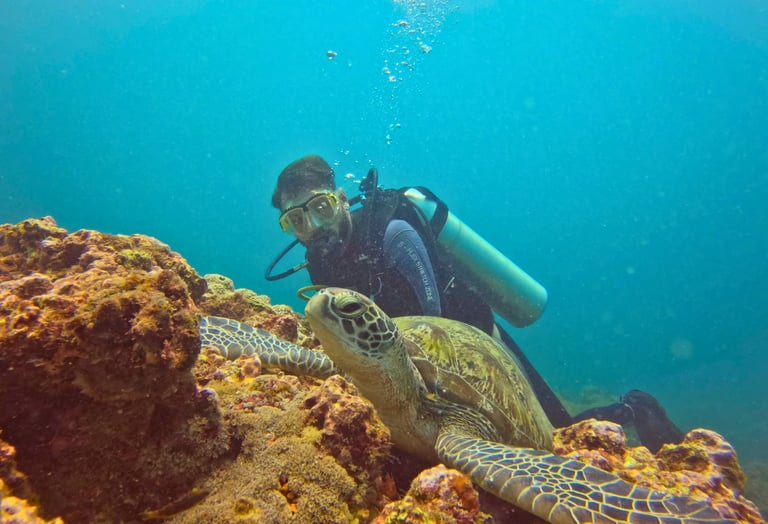
A Scuba diver observing a turtle on a vibrant coral reef in Diani Beach Indian clear ocean water.
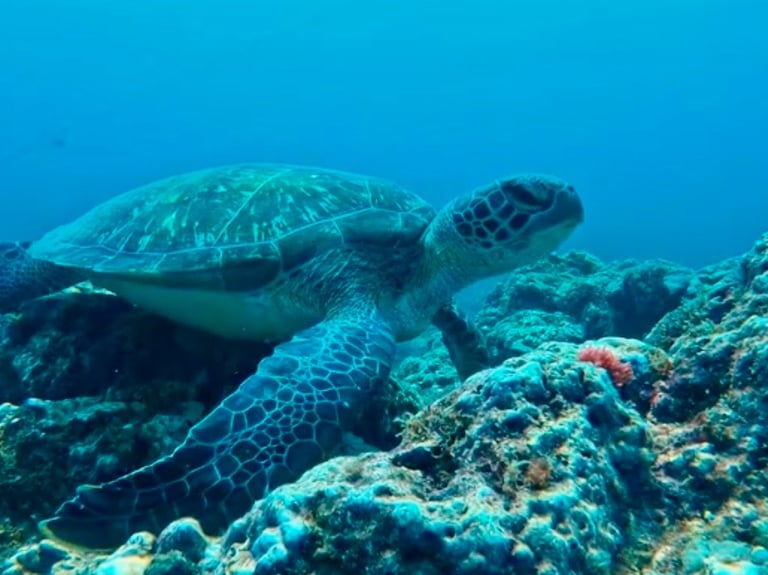
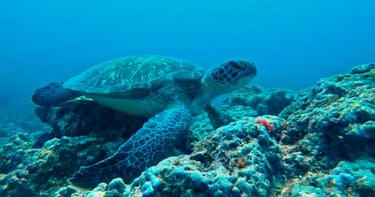
A large green sea turtle swimming over a vibrant coral reef
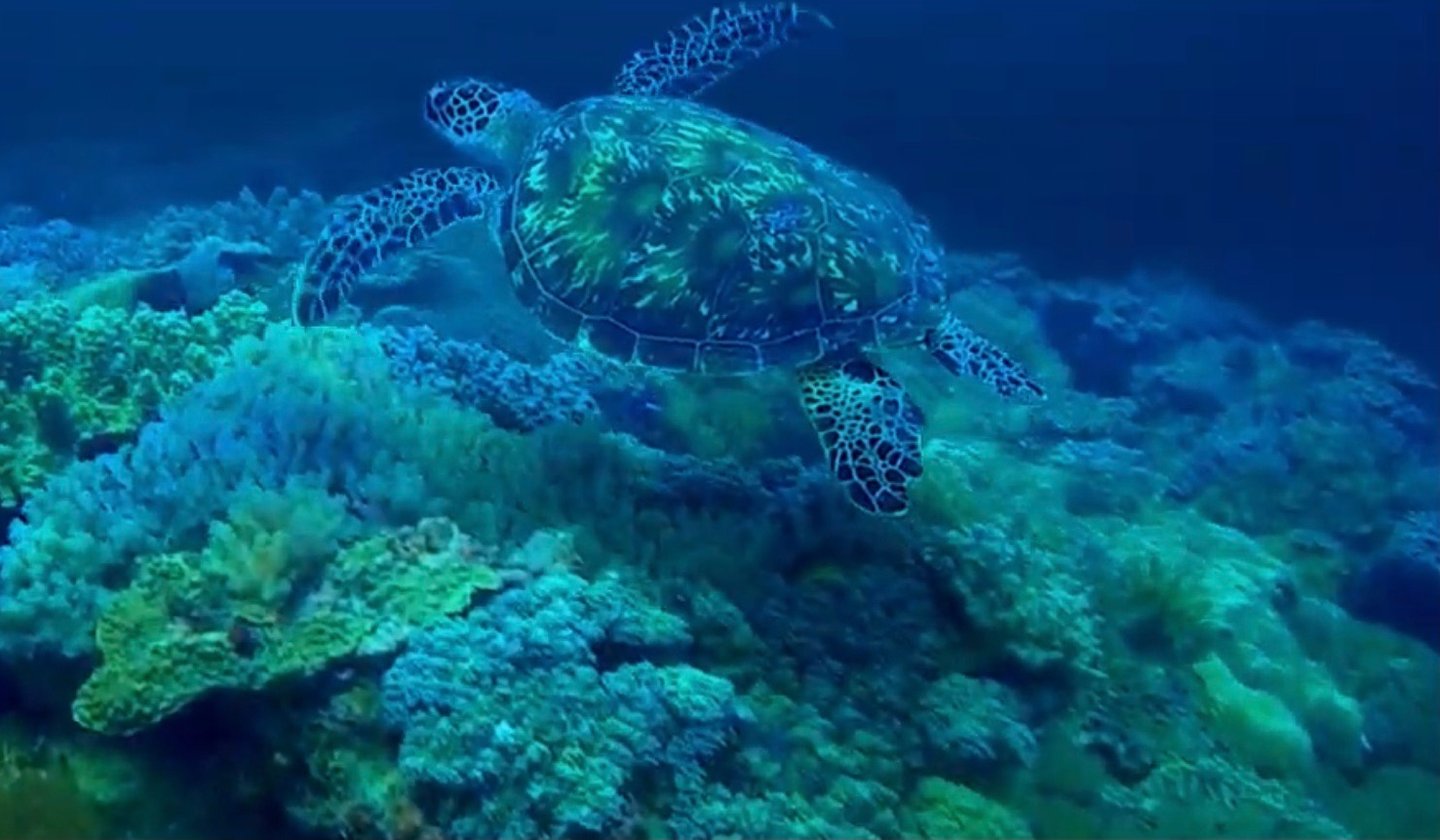
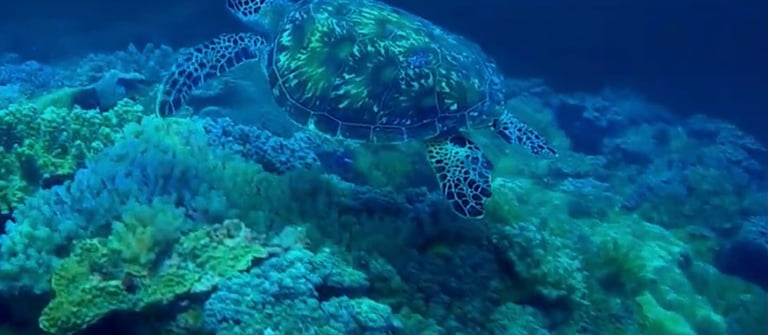
This is a finding that surprised even the researchers conducting the study. They found that when marine animals appeared during a dive, intentional reef contacts went up by 220%. Unintentional contacts increased by 85%, while damaging contacts more than doubled, rising by 106%. Divers were repositioning, finning harder, and reaching out — all in response to the excitement of a close encounter.
This is completely human and one of the most consistent patterns in reef-diving behaviour around the world. Diani Beach marine life is genuinely exciting, with all the dive sites having unique wildlife. At Kisima Mungu, known for its hard coral boulders covered in soft coral, divers get to see two types of turtles — the hawksbill and green turtle — as well as guitar rays, blue-spotted rays, porcupine fish, and various coral reef fish. Galu is a small, round, colourful soft coral reef separate from the main reef, also known for its turtles and schools of coral fish. Igloo is particularly famous for its macro marine life, including boxer shrimp, spider shrimp, cleaner shrimp, leaf fish, Spanish dancers, nudibranchs, octopus, and sometimes blue-spotted rays. Kinondo is known for its larger fish, particularly whale sharks, which can be seen from December to March, with the peak season in February. It is also the only place where large schools of red-tooth triggerfish can be found, along with all types of reef fish. Mwanyanza, directly across from The Scuba Duka Diving Centre, is where divers might see dolphins, manta rays, whale sharks (during season), eagle rays, and giant black rays. Tiwi Wall, Diani Beach’s only wall dive, is well known for its shallow reef top and a gradual drop, where divers can see large schools of coral reef fish such as sweetlips, red snappers, lobsters, mantis shrimps, yellow snappers, Moorish idols, eels, and various other coral inhabitants. The reefs of the Diani-Chale National Marine Reserve also host lionfish, octopus, moray eels, and some of the densest populations of snappers and groupers on Kenya’s coast. When divers spot a turtle resting on the reef ahead of them, their instinct is to get closer — they fin harder, drift lower, and stop monitoring where their body is in the water column.
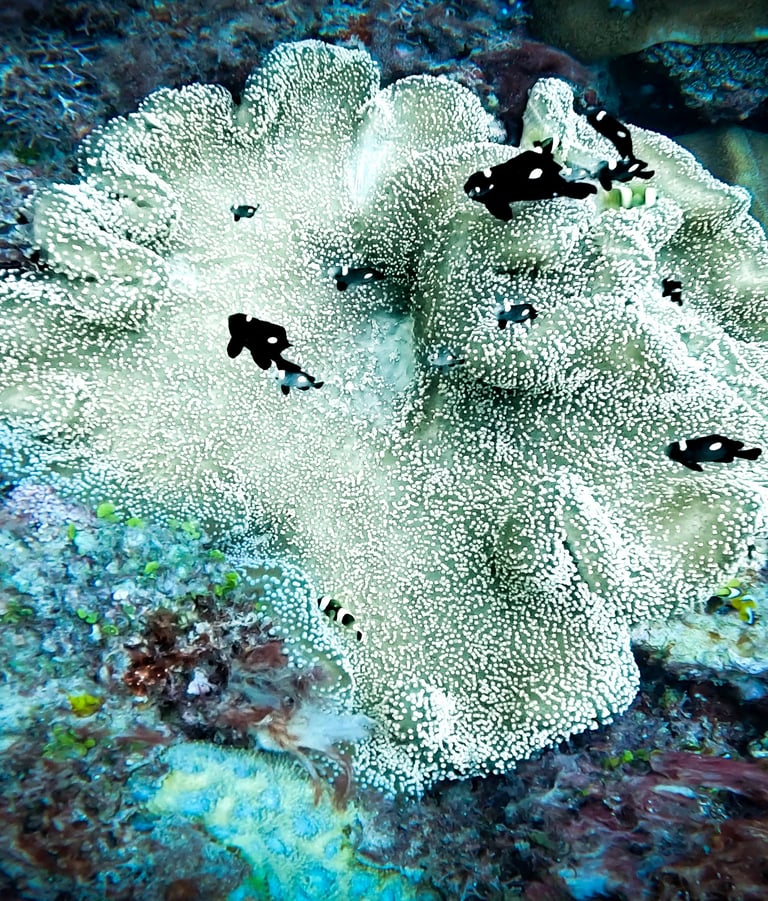
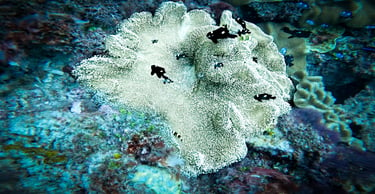
Black and white panda clownfish swimming near a large white sea anemone on a vibrant coral reef.11
The best way to manage this is to prepare before the moment arrives. At The Scuba Duka Diving Centre, every dive trip to the reef includes a briefing on wildlife interaction: how close to approach, when to stop finning, and how to observe without touching or crowding. A turtle swimming toward a diver is a gift. A turtle swimming away is not an invitation to follow. Divers should know their instincts and build better habits into them.
4. Knowing the Dive Site Before Diving
Not all dive sites in Diani demand the same from a diver. Knowing what you are getting into — the depth, the current, the substrate layout, the typical visibility — changes how divers prepare and how they dive.
Some reefs run in fairly shallow water but carry moderate current at certain tidal stages. Some have confined overhead environments where repositioning is limited. Others, depending on the depth, affect nitrogen levels, and buoyancy becomes harder to read intuitively.
Diving a site without knowing it means making decisions in an unfamiliar environment. A single careless fin kick can snap off decades of coral growth.
The Scuba Duka Diving Centre provides detailed site guidance for every reef on its dive list in Diani Beach. For divers new to Diani, our SSI Open Water course builds site awareness progressively, from pool to open ocean, so that reading the environment is already a habit by the time a diver reaches a living reef. The Diani reefs are not backgrounds — they are living structures that respond to intentional or incidental touching.
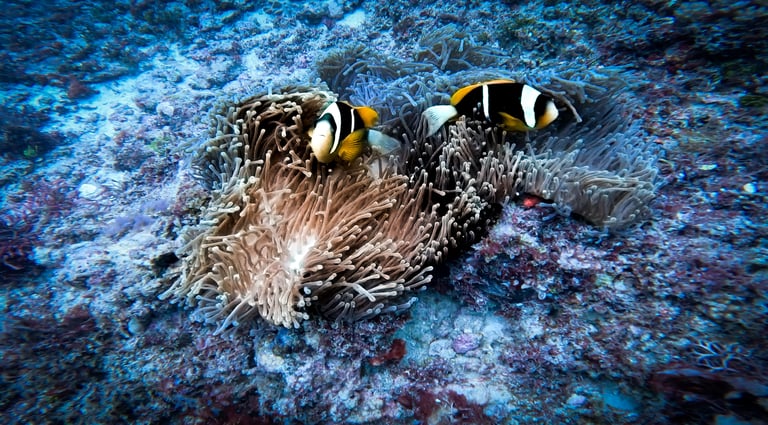
Two black and yellow Clark's anemonefish swimming among the tentacles of a sea anemone on a coral reef.
5. A Dive Buddy’s Behaviour Matters as Much as the Diver’s
The study found a striking social pattern. When one diver touched the reef, others in the group became much more likely to do the same. The researchers called it a social contagion effect: if something looks acceptable in the moment, it gets repeated.
On popular Diani Beach sites, especially in areas dived by multiple groups, this behaviour adds up quickly. If the diver ahead is resting on the bottom between shots, other divers unconsciously register that as normal and may do the same.
Group culture around them either reinforces reef-safe habits or quietly erodes them.
This is one of the strongest arguments for diving with a centre that takes reef briefings seriously and holds every diver — guest, instructor, and guide alike — to the same standard. The Scuba Duka Diving Club is built around a community of reef-aware divers. That peer accountability is not about policing anyone. It is about making good habits automatic, because good diving is simply what everyone around them does.
6. Take a Marine Conservation Course and Actually Apply It
The study found that most divers reported strongly pro-environmental attitudes. They cared about reefs. They believed they were being careful. And yet the data showed consistent, repeated, unintentional damage across the whole group.
The gap between caring about coral and actually protecting it is not closed by good intentions. It is closed by specific knowledge and trained behaviour. That is the Dunning-Kruger pattern at work: the divers most likely to cause damage were the ones most confident they were not.
A marine conservation course gives divers both knowledge and trained behaviour. The SSI Marine Conservation course at Scuba Duka teaches how reef systems actually function, how coral polyps grow, how sediment disturbance affects filter feeders, and how cumulative contact across a dive season degrades a reef over time. When divers understand that coral is a living colony of animals not rock or decoration they interact with it differently, give it a wider berth, and swim with more care.
Marine conservation on Kenya’s South Coast is not abstract. The Diani-Chale National Marine Reserve has protected status. Kisite-Mpunguti Marine National Park is regulated. But paper protection only works when the people inside those areas understand what they are standing over and why it matters.
The Reef Is Still There. Let’s Keep It That Way.
A peer-reviewed study has confirmed what good dive professionals have known for years: caring about coral reefs is not enough. Divers who believe they are careful cause damage every four minutes without knowing it. The coral reefs running along Kenya’s South Coast from Tiwi and Diani Beach through Galu Beach, Kinondo, Chale Island, and south to Kisite-Mpunguti are part of something rare and worth fighting for. They protect our coastline, feed our communities, and draw divers from around the world. They are worth the effort. The solution is straightforward: buoyancy training, smarter equipment choices, site knowledge, a good dive community, and real education in how reefs work. The study’s lead researcher, Bing Lin, put it plainly: “Divers need to understand that they are a part of the problem before we can convince them to become a part of the solution.”
At Scuba Duka Diving Centre, we dive with the reef in mind on every single trip. Whether you want to book a fun dive trip, complete your SSI Open Water course, work on your buoyancy with our SSI Perfect Buoyancy course, or join our Diving Club, we are here to make sure you dive Diani Beach the right way. Ready to dive Diani with the reef in mind? Visit www.scubaduka.com to get started.
About the author
Founder
The Scuba Duka Diving Centre
Diani Beach, kenya
25 year plus International and local diving experience
email: ali@scubaduka.com
Sources: Lin, B. et al. (2026). “Underwater footprint of scuba diving tourism on coral reefs.” Conservation Letters, Wiley. University of Sydney Thriving Oceans Research Hub. Diani-Chale Marine National Reserve & Kisite-Mpunguti Marine National Park, Kenya Wildlife Service.
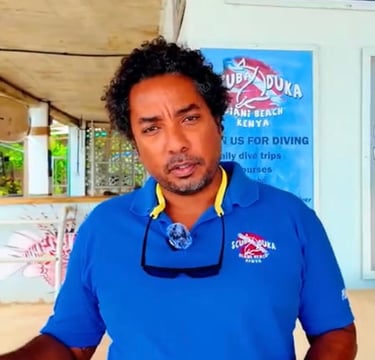
The Scuba Duka Diving Centre
An SSI Dive Center at Soul Breeze Beach Resort, Diani Beach, Kenya. Boutique diving experiences since 2018.
© 2025. All rights reserved.
Contact:
The Scuba Duka Diving Center
Soul Breeze Beach Resort
Diani Beach Road
Diani Beach, Kenya
+254790296404/+254777296404