Skip to content





Meet the full team, with certification cards →

Marineconservation,documented ratherthan claimed
Every dive centre on every coast says it cares about the reef.
Very few publish what they did. This page holds three things only: the briefing every guest gets, the standard our guides dive to, and a record of documented activity.
Written by The Scuba Duka team · Reviewed by Ali, founder and Divemaster Instructor · October 2026
The two-minute reef briefing
Given before every entry, to every guest, on every trip. It is the single most effective conservation measure a dive centre controls.
Observation distance
Close enough to see, far enough that the animal does not change what it was doing. If it moves away, you were too close.
No touching
Not coral, not turtles, not anything. Coral is a living animal with a surface layer that a fingertip removes.
No feeding, no chasing
Feeding changes behaviour permanently. Chasing a turtle for a photograph costs it energy it needed.
Hoses and gauges clipped
A dangling octopus does more reef damage in one dive than most divers do deliberately in a lifetime.
Fins clear of coral
Most damage is accidental and comes from a fin kick nobody noticed. Buoyancy is a conservation skill.
Nothing taken, nothing left
No shells, no coral fragments, no “it was already dead”. Rubbish comes back up with whoever finds it.
Buoyancy is the conservation course
Almost nobody damages a reef on purpose. It happens because a diver is heavy, over-weighted, kneeling to take a photograph, or fighting to hold depth in a mild current. Every one of those is a buoyancy problem.
That is why Perfect Buoyancy is the specialty our instructors recommend before any other. It is sold as a diving course, and it also protects the reef.
SSI Perfect BuoyancyWhat we will not claim
—That diving with us is carbon neutral or has no impact
—That we have restored or replanted reef we have not
—That a percentage goes somewhere we cannot evidence
—That the reefs here are unaffected by warming and bleaching
Overstating conservation work is its own kind of harm. It sells the appearance of care to people who would have paid for the real thing.
Six things we ask you not to do
These are the six rules in every briefing we give. None of them are unusual and none of them cost you anything — they are simply the difference between a reef that looks like this in twenty years and one that does not.
Do not touch, kick or stand on coral
Hard coral is a living animal with a skin only cells thick. A single fin kick can strip that skin and open the colony to infection, and what took decades to grow can be broken in a second. Hold your depth, keep your fins behind you, and stay off the bottom.
Do not touch, chase or disturb marine life
A turtle held down cannot surface to breathe. A chased fish burns energy it needed for the day. Handling also strips the protective mucus layer that keeps fish free of disease. Stay still and animals come closer than they ever will if you swim at them.
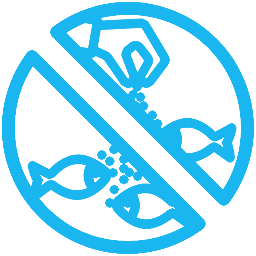
Do not feed marine life
Feeding changes behaviour permanently. Fed fish stop grazing the algae that keeps coral clear, become aggressive towards divers, and gather in unnatural numbers that spread disease. Bread and fruit are not food a reef fish can digest.
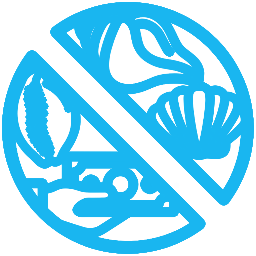
Do not collect marine life, alive or dead
An empty shell is somebody's home — hermit crabs, octopus and small fish all use them, and broken shell is the sand the beach is made of. Removing anything from a Kenyan marine reserve is also illegal. Photographs are the only souvenir we take.
Do not buy marine life souvenirs
Shells, coral, starfish and turtle products on a stall were taken alive from a reef, and every purchase pays for the next one. It is the one conservation decision a visitor makes with real money behind it. Buy carvings, kikoys and coffee instead.
Do not litter
Anything that goes over the side of a boat ends up on a reef or inside an animal. Plastic bottles and bags are the two things our team pulls off these dive sites most often. Bring your rubbish back to the centre — and if you see something on a dive, bring that back too.
Activity record
Published monthly, as documented activity with dates and participants. Nothing appears here before it has happened.
activity log placeholder — monthly entries to be added: date, site, activity, participants, what was found or removed
The first entries will cover reef clean-up dives, the daily site log the team keeps, and any monitoring work carried out with dive club members. Each entry states what was done and by whom rather than what it achieved.
Where we work with a marine authority, research group or another centre, we will name them. Where we simply picked up rubbish on a Tuesday, we will say that too.
Marine parks and protection
Kisite-Mpunguti has been protected long enough that the difference is visible within minutes of a dive: larger fish, bolder behaviour, better coral cover. Park rules and the marine authority's requirements are followed on every visit, and fees are payable per visitor.
Diving Kisite-Mpunguti →Understanding beats instruction
A diver who knows why a parrotfish matters treats the reef differently from one who has merely been told not to touch it. Marine Ecology and Shark Ecology exist for that reason — knowledge programmes, not sightings tours.
Who you will dive with
Seven people run the centre, four of them born and raised in Diani Beach. Between the four instructors sit more than 13,000 logged dives on this stretch of the Indian Ocean. Two qualified dive guides, Sampuli and Captain Michael, guide dives alongside them.
Ali
Founder · Divemaster Instructor25+ years diving in Kenya and abroad. Born and raised in Diani Beach.
Kassim
Scuba Instructor17+ years and 8,000+ logged dives, from Diani to Kisite Mpunguti. SSI and PADI certified.
Salim Swaleh
Scuba Instructor4,000+ logged dives on Diani sites. Teaches SSI beginner to specialty courses.
Omari
Scuba InstructorSSI and PADI Open Water Instructor, 1,000+ logged dives. Shoots underwater photo and video.
Sampuli
Dive GuideBorn and raised in Diani Beach. 100+ logged dives. Guides guest divers and runs equipment checks.
Michael
Dive Guide · Captain20+ years scuba diving and captaining boats. Handles the boat and guides dives.